
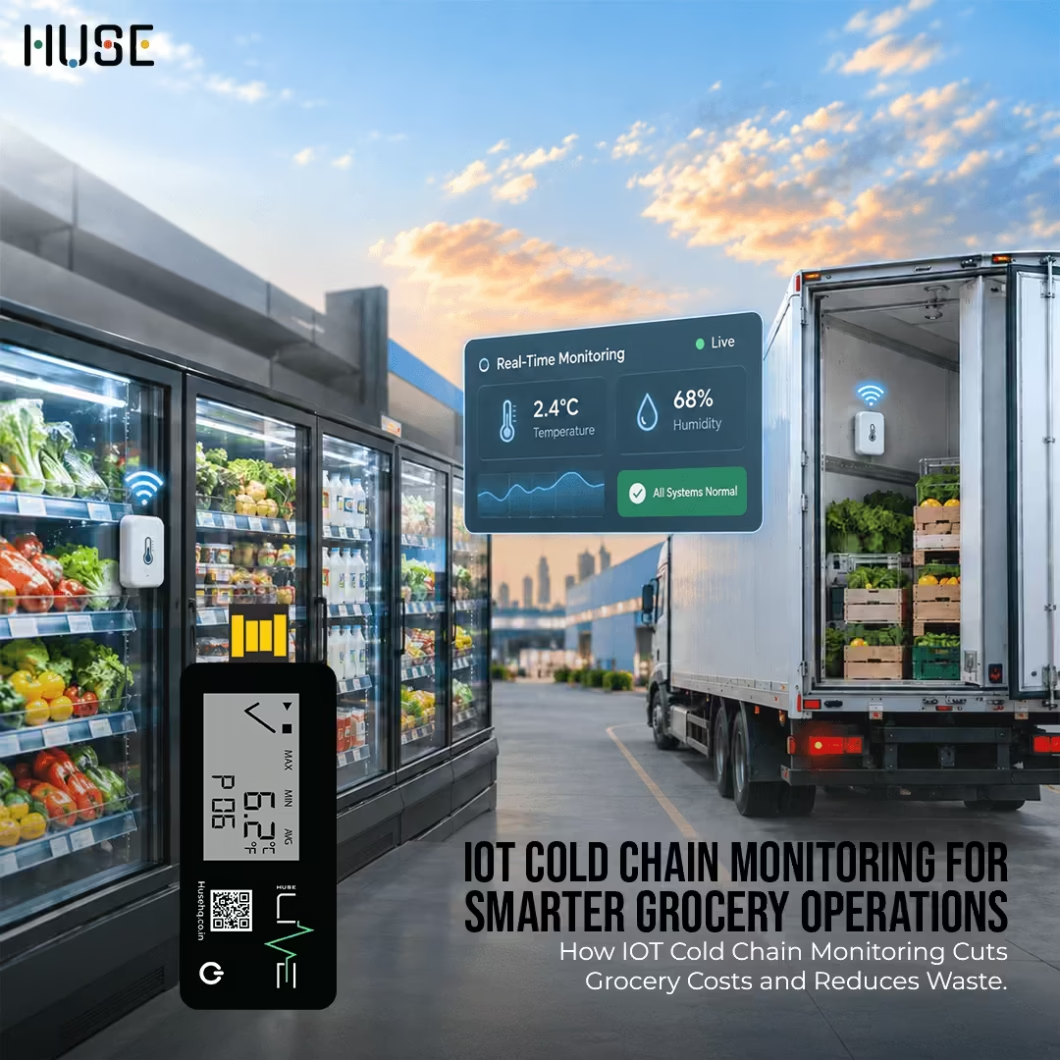
Grocery cold storage never really stops, but a lot of stores still lean on manual checks and gut instinct to catch temperature slips. That difference really adds up; wasted products, wasted electricity, and unexpected maintenance cost the company money in the long run. The IoT cold chain monitoring system links the refrigerators and delivery trucks to provide information on the current situation.
IoT Cold Chain Monitoring for Smarter Grocery Operations
Grocery chains lose money in ways that rarely show up on a single invoice. An overnight temperature increase beyond the acceptable limits for a particular freezer could compromise an entire batch of milk or fruits, and across dozens of locations, small slips add up fast.
Managers can’t watch every compressor around the clock, and paper logs miss what happens overnight.<IoT cold chain monitoring bridges the gap by providing information on the current status of each refrigerator, each freezer, and each logistics vehicle in real time to catch issues before it’s too late.
How Does a Cold Chain Monitoring System Improve Grocery Operations?
A reliable cold chain monitoring system links every refrigeration point into one live feed. Store teams don’t have to wait for a customer complaint or a spoiled shelf to know something’s wrong.
Real-Time Temperature and Condition Tracking
Sensors inside each unit send temperature and humidity readings straight to a dashboard, so nothing slips through. Staff can spot a slow drift long before it turns into spoiled stock.
Early Detection of Refrigeration Problems
Compressors may exhibit abnormal behaviors prior to failure. Monitoring may assist the technicians in identifying such problems. Since the system flags these patterns early, technicians can step in before a breakdown hits the shelves.
Better Visibility Across the Cold Chain
Multi-store operators often struggle to see what’s happening at each location in real time. A solid data acquisition system feeds every dashboard, so regional managers compare sites from one screen instead of chasing separate reports.
Cold Chain Monitoring Solutions for Reducing Grocery Losses
Even a well-run store can lose thousands each month to conditions nobody notices until it’s too late. Modern cold chain monitoring solutions turn scattered temperature checks into one connected safety net.
Cold Chain Monitoring Solutions for Temperature Control
Keeping temperatures steady is really what good cold chain monitoring solutions come down to. Continuous sensors keep refrigeration and transport units within the exact range each product needs, so no one’s left guessing whether last night’s settings actually held.
Reducing Food Spoilage With Real-Time Alerts
The moment a fridge drifts outside its safe range, an alert reaches the right person instantly. Real-time alerts may help reduce spoilage by facilitating fast responses in case of temperature variations numbers that are hard to ignore once you’ve dealt with a spoiled shipment firsthand.
Improving Maintenance and Reducing Downtime
Nobody wants to find out a compressor died overnight. Instead of waiting for that call, teams can schedule a repair the moment early warning signs show up, turning what used to be a scramble into a planned fix. With time, proactive maintenance can assist in avoiding equipment breakdowns and increasing its lifespan.
Supporting Compliance and Digital Records
When an auditor shows up, they want proof, not a verbal promise that everything’s been fine. Automated digital logs replace paper binders and give a clean, timestamped history on demand.
How IoT Cold Chain Monitoring Helps Cut Costs
Cutting costs is usually why grocery operators look into IoT cold chain monitoring, a question Huse HQ hears often from fleet and warehouse teams. About a third of all the food produced for human consumption is wasted, mostly in the process of transport. (Source).
- Reduces food spoilage from unnoticed temperature deviations
- Identifies refrigeration problems before major breakdowns>
- Helps reduce unnecessary energy consumption
- Minimises emergency maintenance and downtime
- Automates temperature records and reporting
- Gives managers real-time visibility across multiple locations
Refrigeration can account for 40 to 60 percent of a supermarket’s total energy consumption, making it the single largest electricity draw in most stores. Results still depend on your equipment and store layout.
What Does IoT Cold Chain Monitoring Cost?
Budgeting for a monitoring rollout depends on several moving pieces, not one flat price. The core data acquisition system, sensor count, connectivity type, and dashboard all shift the final number.
Hardware and Sensor Costs
Basic single-use cold chain monitoring devices cost far less than reusable IoT sensors with live connectivity. Gateways and BLE or LoRaWAN hardware add to the bill but extend coverage across a full warehouse.
Installation and System Integration
Fitting sensors into existing refrigeration and delivery fleets takes labor, wiring, and sometimes new mounting points. Costs climb further when the system has to connect with older store software.
Software, Connectivity and Monitoring Costs
Cloud dashboards, data storage, and ongoing connectivity usually run as a monthly subscription rather than a one-time fee. Many providers bundle alerts and reporting into this cost, keeping things simpler to manage.
Cold Chain Monitoring Cost Comparison – India vs Other Countries
Prices shift sharply by region, so the table below gives a general range rather than a fixed quote.
| Country/Market | Basic monitoring cost | Advanced IoT monitoring cost | Typical additional costs |
|---|---|---|---|
| India | ₹1,000–₹20,000+ per monitoring device, depending on technology and connectivity | ₹3 lakh–₹27 lakh for a broader custom platform* | Connectivity, installation, cloud platform |
| USA | $100–$300 per basic logger | $2,500–$8,000 per location | $25–$150/month software |
| International market | $15–$50 per single-use logger | $150–$500 per reusable IoT sensor | $5–$20/month platform |
*Figures are indicative estimates and vary by vendor, scale, and project scope.
Why Choose Huse HQ for IoT Cold Chain Monitoring?
Grocery cold chains work best when temperature data arrives in real time, not after the damage happens. IoT cold chain monitoring replaces scattered checks with one connected system that cuts spoilage and lowers energy costs.
At Huse HQ, our data loggers and live tracking tools handle exactly this job across food, retail, and pharma supply chains. Let’s fix your cold chain before your next shipment spoils.
FAQs IoT Cold Chain Monitoring
How does IoT cold chain monitoring help prevent food spoilage?
At the end of the day, it's all about catching the problem before it becomes one. The IoT cold chain monitoring allows for early detection of any temperature variances that will give your staff enough time to act.
What features should I look for in cold chain monitoring devices?
Avoid selecting a monitoring tool solely based on the cost factor. Effective cold chain monitoring devices need to provide accurate sensors, dependable battery life, connectivity through technologies like BLE or LoRaWAN, and local data storage in the absence of connectivity.
What role does a data acquisition system play in cold-chain monitoring?
The data acquisition system will collect temperature readings, humidity readings, and location data from all connected sensors. The collected data will then be sent to a dashboard for analysis.
What cold-chain monitoring solutions does Huse HQ provide?
At Huse HQ, we offer one-time data loggers and live-tracking services for food, retail, and pharmaceutical logistics chains. Our products offer visibility starting from the warehouse all the way to the final mile delivery phase.
How can grocery businesses detect temperature problems before products are damaged?
If a fridge or freezer goes beyond the set temperature range, the system will send an alarm at an interval that is configured for it. This will allow a window for response before the goods are affected.