

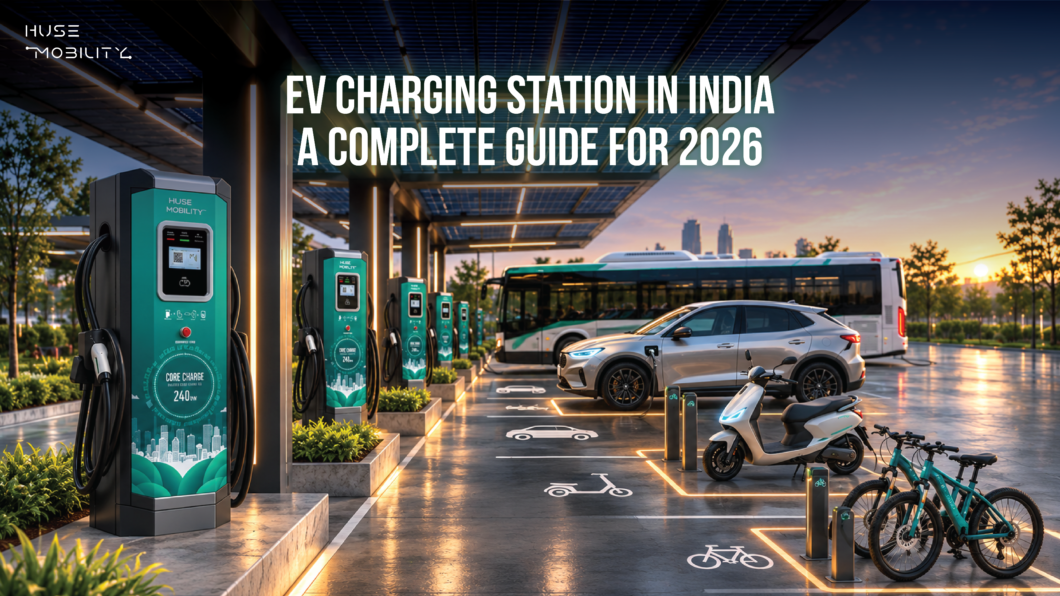
Buying an electric vehicle turns out to be the easy part. Figuring out where and how to charge it takes more thought. This guide covers how an EV charging station in India works, plus the connectors and station types worth knowing. Read on, and the choices should feel a lot less confusing by the end. Whether the plan is a home charger or a depot for many vehicles, the basics stay the same.
EV Charging Stations in India and How They Work
Think of a charging station as a safe bridge between the power grid and a vehicle battery. Once the EV is plugged in, electricity travels through a cable and connector into the vehicle. Inside, the battery management system decides how much power the battery should take at any moment.
An EV charging station in India has to serve very different vehicles, from scooters to cars. The market behind it is growing fast, too, according to Grand View Research. India’s charging infrastructure market generated USD 557.4 million in 2025 and could reach USD 3,856.9 million by 2033.
How Does EV Charging Work in India?
Grid power arrives as AC, but a battery can only store DC. So most EV charging systems handle that conversion in one of two places.
-
AC and DC Charging Options for Different EVs
With AC charging, the vehicle’s own onboard charger converts the power to DC. DC fast chargers do that job inside the station, which is why they work faster.
-
Common EV Charging Connectors Used in India
Type 2 handles AC charging, while CCS2 and CHAdeMO cover DC fast charging for passenger cars. Meanwhile, low-voltage standards like Bharat AC-001 and DC-001 were designed for light EVs like e-rickshaws and are being phased out. Mismatched connectors cause plenty of compatibility problems, so check the vehicle’s charging port before buying anything.
-
Charging Speed and Battery Compatibility
Compatibility of batteries with chargers requires taking into account their voltage, chemistry, and the maximum charging current they can take. It is determined by the BMS, and therefore it is necessary to match charger capacity to that of the battery. Fast charging with DC can also accelerate battery aging.
What Should You Know About EV Charging Infrastructure?
EV charging infrastructure means everything needed to deliver power safely, not just the charger itself. Wiring, safety gear, and software all count as part of the picture.
Key Components of EV Charging Infrastructure
Every setup depends on a few core parts. Together, they decide how safe and dependable charging feels.
- Power source, such as the grid connection that feeds the station
- Charging station, which controls and delivers the power
- Cable and connector, which link the station to the vehicle port
- Station management software, which manages payments, access, and power delivery
- Safety features like surge protection and fault detection
Proper integration of these components ensures reliable performance and a smooth user experience across every charging session.
How Is an EV Charging Station Manufacturer Involved in the Charging Ecosystem?
>An EV charging station manufacturer designs and builds the chargers drivers plug into every day. Its decisions shape safety, speed, and how long a charger keeps working.
-
Charger Quality and Technical Specifications
Good chargers come with surge protection, temperature monitoring, and automatic fault detection built in. Buyers should compare power ratings and safety features before settling on a model.
-
Compatibility With Different Electric Vehicles
A charger should support the connector standards local vehicles use, such as CCS2 and Type 2. Otherwise, some drivers arrive at the charger and discover they simply cannot plug in.
-
After-Sales Support and Maintenance
Charging hardware needs regular checks to stay in good shape over the years. Warranty terms and local service support deserve a close look before anyone signs anything.
-
Customization Options for Different Charging Applications
A home garage, an office parking lot, and a fleet depot need different power levels. Flexible charger options let the setup fit the site instead of the other way around. As a reputable company, Huse HQ provides AC and DC options for chargers that are adaptable to the specific setting, be it home, office, or fleet depot.
-
Smart Charging Features and Energy Management
Smart features let owners monitor sessions and update firmware without visiting the charger in person. Usage tracking and billing tools make shared setups much easier to manage day to day.
What Types of EV Charging Stations Are Available in India?
Every electric charging station differs by location, power level, and the people using it. Here’s a quick tour by use case, starting with the one closest to home.
-
Home Charging Stations for Personal EVs
Home chargers are usually AC units that fill the battery slowly while the owner sleeps. In housing societies, the managing committee has to approve the installation first.
-
Workplace Charging Stations for Employees
Offices often install AC chargers so employees can charge their vehicles during the workday. Usage tracking helps managers see who charges when and keep costs fair.
-
Public Charging Stations in Urban Areas
Malls, hotels, and busy parking areas host public chargers for drivers needing a quick top-up. They also help city dwellers who cannot install a charger at home.
-
DC Fast-Charging Stations on Highways
DC fast chargers make the most sense on highways, where long trips call for short stops. Drivers get back on the road much sooner than they would with AC charging.
-
Fleet Charging Stations for Commercial Vehicles
Fleet depots need many vehicles charged on schedule, usually overnight before the next shift. Scalable chargers and monitoring tools are common choices for commercial setups.
Why Is Huse HQ a Reliable Choice for an EV Charging Station in India?
A good EV charging station in India comes down to a few simple matches. The connector has to fit the vehicle, and the charger type has to suit how often it gets used. Get those right, and most of the later headaches never show up.
At Huse HQ, we offer AC and DC chargers for homes, businesses, and fleets alike. Surge protection, fault detection, and temperature monitoring come built into our systems. Our team also handles the site assessment, installation, and after-service, which keeps things in one place. Every unit comes backed by our manufacturer’s warranty and dedicated customer support.