
As renewable energy adoption continues to grow, the need for reliable renewable energy storage solutions has become more critical than ever. Solar and wind power are abundant, but without effective storage, excess energy can be wasted or unavailable when demand peaks.
To make renewable energy dependable and scalable, storage technologies must work alongside generation systems. At HUSE HQ, we actively work across lithium battery solutions, floating solar, and energy storage systems, helping bridge the gap between clean energy generation and consistent power delivery.
Value of Energy Storage Solutions for Renewables
The use cases and the value added beyond backup power makes energy storage solutions attractive to almost every industry including commercial, utilities, and large scale energy producers. Technical advances in storage systems have made it possible to achieve improved reliability, cost control, and a positive impact on the environment for these segments:
Improved Reliability of Energy – Energy storage systems can support excess energy requirements when solar generation falls or when the wind stops. This can help reduce reliance on backup diesel systems or on the power grid.
Controlled Energy Costs – By charging during times of low cost energy or high grid energy generation and then discharging during peak power demand, energy storage systems can significantly reduce a client’s peak demand charges.
Grid Flexibility to Meet Demands – Energy storage systems can maintain a flexible supply and demand balance for the grid and improve the stability caused by variable solar energy and wind energy.
Minimize Renewable Energy Waste – Excess solar energy that would be wasted can be stored and used at a later time.
Essential Services Continuity – Critical energy services such as hospitals, data centers, and manufacturing can continue to operate during a grid blackout.
Industrial Carbon Emissions – Energy storage systems allow the industrial sector to integrate renewable energy within their processes that relied on carbon emissions before.
How we design our storage systems at HUSE is influenced the most by these benefits
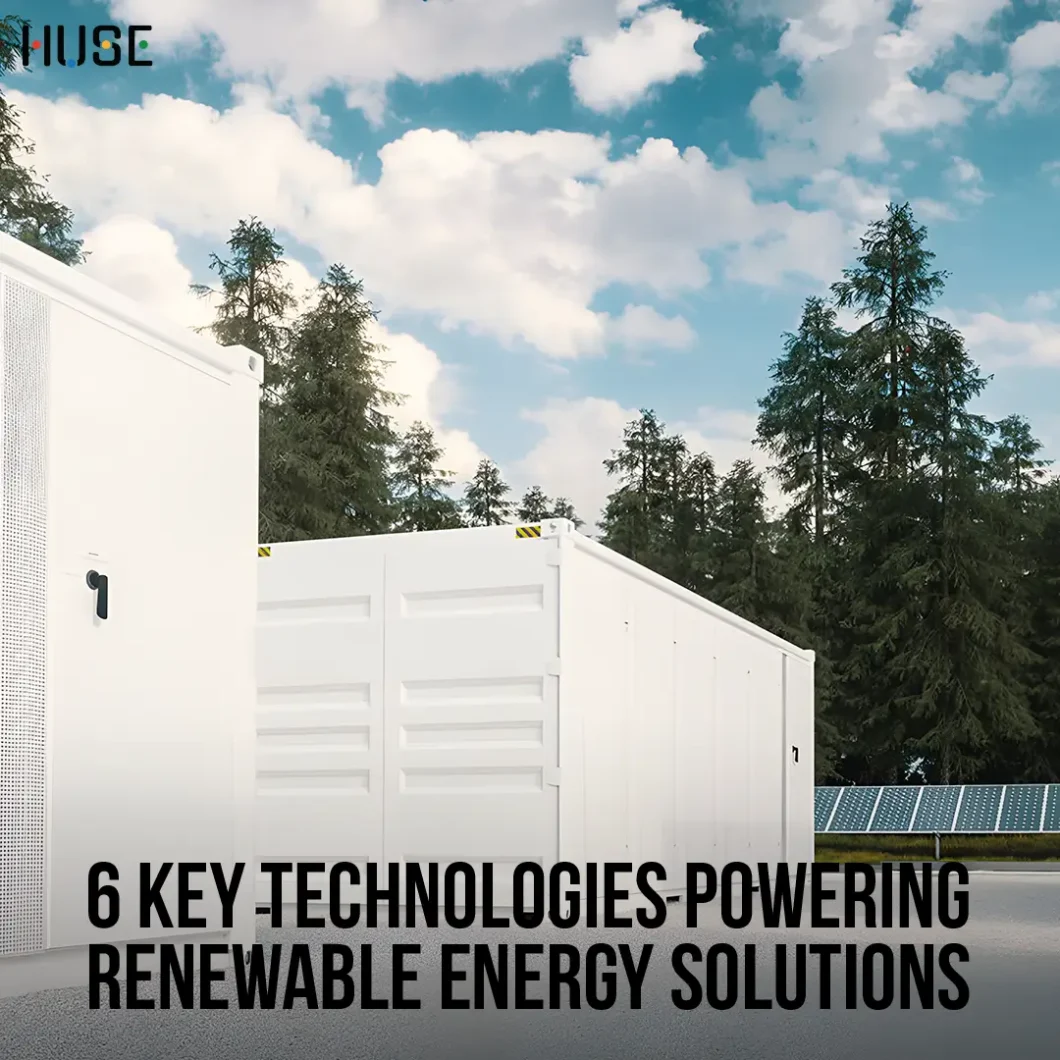
6 Important Renewable Energy Storage Technologies
Different storage technologies address different energy needs based on duration, scale, and application. Below are six key solutions shaping the future of renewable energy systems.
Pumped hydro storage houses excess energy by pumping water up using electricity to a higher location. Electricity is later generated using water gravitational forces by releasing gravity down on turbines to generate current. This is considered the most advanced and dominant large scale storage technology. However, it only serves utilities and regions with proper geography and water resources to support long-term, on-demand, and flexible grid services.
Flywheels and Gravity Storage
Flywheels store surplus energy as a rapid rotation of a large wheel. Power is generated once the wheel is put to use. This is a very flexible methodology with minimal maintenance cost and a fast response. This technology serves similar purposes to gravity storage. This stores energy by using electricity to lift a massive structure. This technology serves similar, smaller purposes of balancing frequency and response.
1. Floating Solar
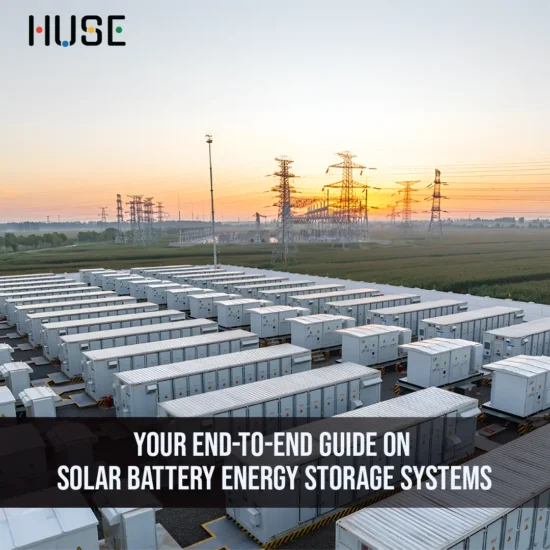
Floating solar systems generate power on water bodies, reducing land constraints while improving efficiency through natural cooling. When combined with energy storage, floating solar enhances renewable output consistency and grid reliability.
At HUSE HQ, floating solar forms a key part of integrated renewable deployments, especially for industrial reservoirs and large-scale installations.
2. Battery Energy Storage Systems (BESS)
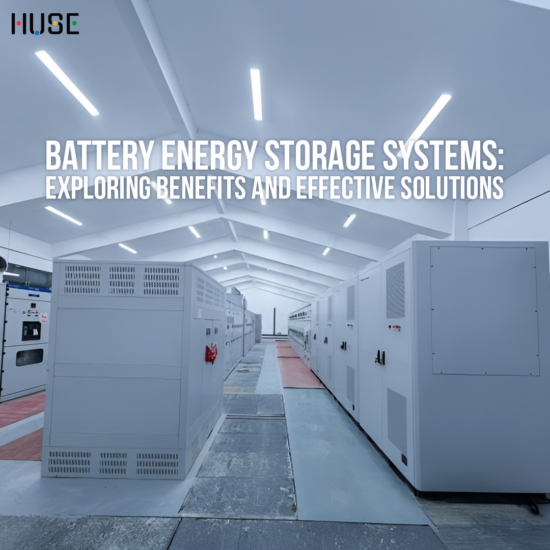
Battery Energy Storage Systems play a central role in modern renewable infrastructure. BESS enables peak load management, grid balancing, renewable integration, and backup power support. These systems are highly scalable and adaptable across commercial, industrial, and utility-scale applications.
3. Lithium Battery Solutions
Lithium batteries remain one of the most widely adopted energy storage technologies due to their high energy density, fast response times, and improving lifecycle economics.
At HUSE HQ, lithium battery solutions support a wide range of energy storage applications, delivering reliable performance and long-term operational stability.
4. Hydrogen Energy Storage
Hydrogen storage converts surplus renewable electricity into hydrogen through electrolysis. This hydrogen can be stored and later converted back into electricity, enabling long-duration and seasonal energy storage—particularly useful for large-scale renewable systems.
5. Compressed Air Energy Storage
Compressed air energy storage involves storing pressurised air in underground caverns and releasing it to generate electricity when required. This technology supports long-duration grid storage and enhances renewable energy reliability.
6. Thermal Renewable Energy Storage
Thermal energy storage uses materials such as molten salts or phase-change materials to store heat energy. These systems are commonly applied in solar thermal plants and industrial heat recovery, improving overall system efficiency.
How to Choose the Right Renewable Energy Storage Solution
Selecting the right renewable energy storage solution depends on multiple factors, including energy demand patterns, cost considerations, and scalability needs. While technology continues to evolve, real-world usability and system integration remain the deciding factors.
Key aspects to evaluate include:
- Required storage duration and discharge cycles
- Capital and lifecycle costs versus expected ROI
- Scalability to support future renewable expansion
- Safety, environmental impact, and regulatory compliance
- Integration with existing grid and power infrastructure
Working with experienced solution providers such as HUSE HQ helps ensure that storage systems are designed, deployed, and scaled effectively.
Applications of Renewable Energy Storage Solutions
There are many industrial and commercial uses of renewable energy storage that extend beyond keeping the lights on.
Peak Load Management – Renewable energy storage systems discharging during high demand hours can help minimize demand charges.
Energy Arbitrage – Energy is stored during off-peak hours and sold during peak hours.
Grid Balancing and Frequency Response – As renewable energy sources penetrate the grids, so will the need for stability through renewable energy storage.
Renewable Curtailment Reduction – This is efficiently addressed by energy storage systems since it is far more cost effective to store excess solar or wind energy than letting it go to waste.
EV Charging Infrastructure Support – With the high visibility charging stations, storage systems help minimize peak demand by maintaining a steady charging speed. The overlap of storage and EV charging at HUSE HQ helps improve the systems in this region.
Critical Backup for Industry – It helps manufacturing, cold storage and data intensive processes.
The Impact of Price Drops on Battery Storage in India
Battery storage is becoming increasingly feasible for commercial and industrial applications beyond utility-scale deployment due to drops in battery storage costs over the last decade. In India, these trends have been met by enabling policies like the provision of viability gap funding for battery energy storage systems and the implementation of production-linked incentives for battery cell manufacturing. Drops in battery storage costs, coupled with enabling policies, suggest that storage is a prudent short to medium term investment in India as industries look to decrease reliance on diesel-based generators and become more efficient in the face of increasing grid tariffs.
The Future of Renewable Energy Storage
- The field of renewable energy storage is growing and changing rapidly. Here’s a look at the driving forces behind this innovation:
- Long-Duration Energy Storage — Increasing customer demand for systems capable of discharge for periods greater than ten hours for bridging longer gaps caused by intermittent renewable energy sources.
- Solid-State Batteries — systems may gain the advantage of greater safety and energy density over lithium-ion.
- AI-Driven Storage Optimization — Sophisticated forecasting and dynamic dispatch algorithms make storage system responses to changing demand and pricing signals more efficient.
- Solar-Plus-Storage as Standard — The combination of generation and storage is evolving from an add-on to a default configuration for new industrial and commercial installations.
| Technology | Typical Duration | Best For | Key Advantage | Key Limitation |
|---|---|---|---|---|
|
Lithium-Ion Battery (BESS) |
Minutes to hours |
Commercial, industrial, utility-scale |
Fast response, scalable, widely available |
Degrades over time; fire safety considerations
|
|
Pumped Hydro Storage |
Hours to days |
Utility-scale, grid balancing |
Proven at scale, long lifespan |
Requires specific geography and water access |
|
Compressed Air Energy Storage |
Hours to day |
Grid-scale, long-duration support |
Long-duration capability |
Requires underground caverns; site-specific |
|
Thermal Energy Storage |
Hours to seasonal |
Solar thermal plants, industrial heat, buildings |
Efficient heat/cool storage; lower cost materials |
Limited to heat-based applications |
|
Hydrogen Storage |
Days to seasonal |
Large-scale, seasonal, hard-to-electrify sectors |
Long-duration and seasonal storage potential |
Lower round-trip efficiency; higher infrastructure cost |
|
Flywheel / Gravity Storage |
Seconds to minutes |
Grid frequency response |
Very fast response, low maintenance |
Short duration; not suited to long backup needs |
|
Floating Solar + Storage |
Hours (paired) |
Industrial reservoirs, land-constrained sites |
Reduces land use, improves solar efficiency via cooling |
Site-dependent; requires water body access |
Conclusion
Renewable energy storage solutions are essential for making clean energy reliable, flexible, and future-ready. By combining technologies such as floating solar, lithium batteries, and advanced energy storage systems, renewable power can move beyond intermittency to become a dependable energy source.
At HUSE HQ, we focus on delivering integrated, practical solutions that support India transition toward resilient and sustainable energy infrastructure. As renewable adoption grows, energy storage will remain the key enabler of long-term success. Get in Touch with us to know more about renewable energy storage solutions.
FAQs On Renewable Energy Storage Solutions
What are renewable energy storage solutions?
Renewable energy storage solutions are systems that store electricity generated from renewable sources like solar and wind for later use. At Huse HQ, our advanced renewable energy storage solutions help businesses and homes store surplus power efficiently, ensuring uninterrupted energy supply even when renewable generation is low.
Why are renewable energy storage solutions important?
Renewable energy storage solutions are crucial because renewable sources like solar and wind are intermittent. Huse HQ’s renewable energy storage solutions ensure energy reliability, grid stability, reduced power outages, and maximum utilization of clean energy while lowering electricity costs.
How do Huse HQ renewable energy storage solutions work?
Huse HQ renewable energy storage solutions capture excess energy produced during peak generation hours and store it in high-performance battery systems. This stored power can then be used during peak demand, nighttime, or grid failures, improving energy efficiency and sustainability.
Who can benefit from renewable energy storage solutions?
Businesses, industries, commercial buildings, and residential users can all benefit from renewable energy storage solutions. Huse HQ designs scalable renewable energy storage solutions that cater to small homes, large enterprises, and renewable energy projects.
Are renewable energy storage solutions cost-effective?
Yes. Renewable energy storage solutions from Huse HQ reduce dependency on the grid, lower peak demand charges, and maximize renewable energy usage. Over time, they offer significant savings on electricity bills while supporting environmental sustainability and energy independence.
What are the main types of renewable energy storage technologies?
The main categories are battery storage (including lithium-ion), pumped hydro storage, thermal storage, mechanical storage (compressed air, flywheels, gravity systems), and hydrogen storage. Each suits different duration, scale, and cost requirements.
Which storage solution is best suited for industrial or commercial use in India?
Battery Energy Storage Systems (BESS), particularly lithium-based, are the most common choice for commercial and industrial users due to their scalability, fast response, and falling costs. Floating solar paired with storage is also gaining traction for sites with water body access.
How does a Battery Energy Storage System (BESS) work?
A BESS stores electricity in rechargeable battery cells during periods of excess generation or low demand, then discharges it during peak demand or outages, helping balance supply and manage costs.
A BESS stores electricity in rechargeable battery cells during periods of excess generation or low demand, then discharges it during peak demand or outages, helping balance supply and manage costs.
Solar and wind generation is intermittent — it depends on weather and time of day. Storage smooths out this variability, ensuring power is available when it's needed rather than only when it's generated.
What is the difference between BESS and pumped hydro storage?
BESS uses battery cells and is well suited to fast, flexible, small-to-mid-scale applications. Pumped hydro uses water and elevation to store energy and is typically used for large-scale, long-duration grid storage, but requires specific geographic conditions
How much does a renewable energy storage system cost?
Costs vary based on technology, capacity, and application, but battery storage costs have declined significantly over the past decade, making it increasingly viable for commercial and industrial projects, especially with supportive government incentives.
What government incentives support energy storage adoption in India?
India offers viability gap funding for battery energy storage systems and production-linked incentives for battery cell manufacturing, both aimed at accelerating storage adoption alongside renewable energy expansion.
How does floating solar work together with energy storage?
Floating solar systems generate power on water bodies, benefiting from natural cooling that improves efficiency. When paired with storage, this combination improves both output consistency and overall grid reliability, especially for industrial sites with reservoir access.
What is the typical lifespan of a lithium battery storage system?
Lithium battery storage systems typically last 10–15 years or more, depending on usage patterns, depth of discharge, and maintenance, with performance gradually declining over the battery's lifecycle.